
Agriculture
The big arable land in Africa means huge potential for agriculture. Realising this agricultural potential will require innovative science solutions. Below are lessons from traditional Africa to guide you towards science-based solutions for improving agriculture in your country. Also provided are the different careers from which you can select to participate in improving agriculture in your country.
Our Approach
From Tradition to Innovation
The Tool
We study agricultural practices in traditional African to find proven, local wisdom.
The Process
We apply inquiry-based principles to guide on how the proven wisdom can help in solving challenges in African agriculture.
The Results
A generation empowered to create innovative, sustainable agricultural solutions and pursue rewarding careers.
1. Conserving soil water
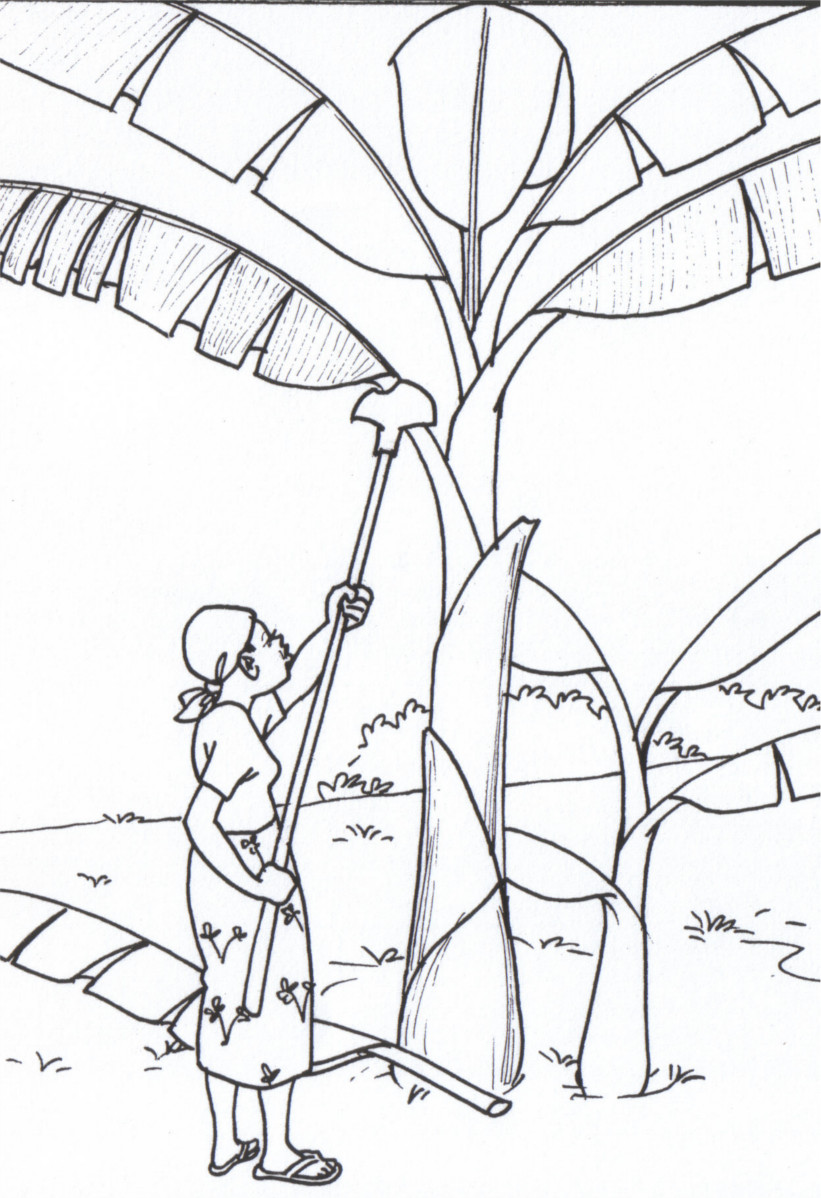
Ideas from tradition Africa
Soil water
a.Banana trees were trimmed of old leaves and used, together with other rubbish, to cover the garden.
b) The science behind
Mulching conserves water in the soil, reduces growth of weeds in gardens and improves soil fertility.
(c) Challenge for present Africa
It is becoming increasingly difficult to rely on rainfall for Agriculture. This means a need to promote irrigation (watering crops) in African countries. Because of the the topical hot climate however, most of Africa’s soils can easily dry up. Consequently, practices that conserve soil water such as mulching will have to be embraced, if irrigation agriculture is to succeed in African countries.
(d) What you need to consider
i. Where in your country is mulching practiced?
ii. What advantages do communities that practice mulching have?
iii. Which ways can improve mulching in your country?
iv. What other local practices conserve soil water in your country?
v. Which measures can be employed to reduce water used in irrigation agriculture?
vi. Which careers should be promoted to get the workforce for irrigation agriculture in your country?
2. Improving local crops
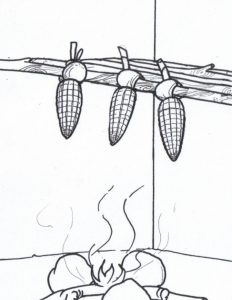
Ideas from tradition Africa
Improving local crops
a.A given crop, say Maize, was grown to maturity, harvested and dried. The best looking ones were preserved for planting.
(b) The science behind
-Plants pass on their looks from parents or grandparents on to offspring. By keeping good-looking seed for next season, one ends up, after several cycles of planting and harvesting, with a better crop that is well adapted to the local environment.
-Hanging dried crop above the fire place protected it from pests and other bio-destroying agents such as fungi, while at the same time ensuring that water or moisture content in the crop remained low.
(c) Challenge for your country
-Our great grand parents in Africa produced numerous crop varieties that are better adapted to local environments. Many of these crop varieties are still present. The challenge now is (i) Ensuring we do not lose these varieties (ii) Improving them with a view of addressing some of the agricultural problems facing your country.
-There is need to improve the quality of planting materials, since agriculture depends largely on the quality of planting materials.
(d) What you need to consider
i. Do you know of any local crop variety in your country?
ii. How does it differ from an exotic crop variety?
iii. Why should your country preserve that local crop variety?
iv. Can that local crop variety be improved? If so, how?
v. Who produces planting materials that farmers use in your country?
vi. Which careers should be promoted in order to get workers for improving crop varieties in your country?
3. Restoring soil fertility
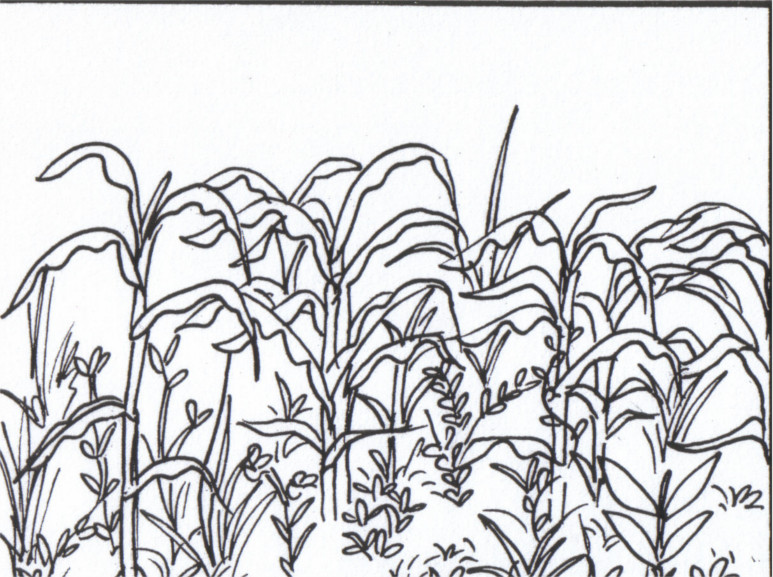
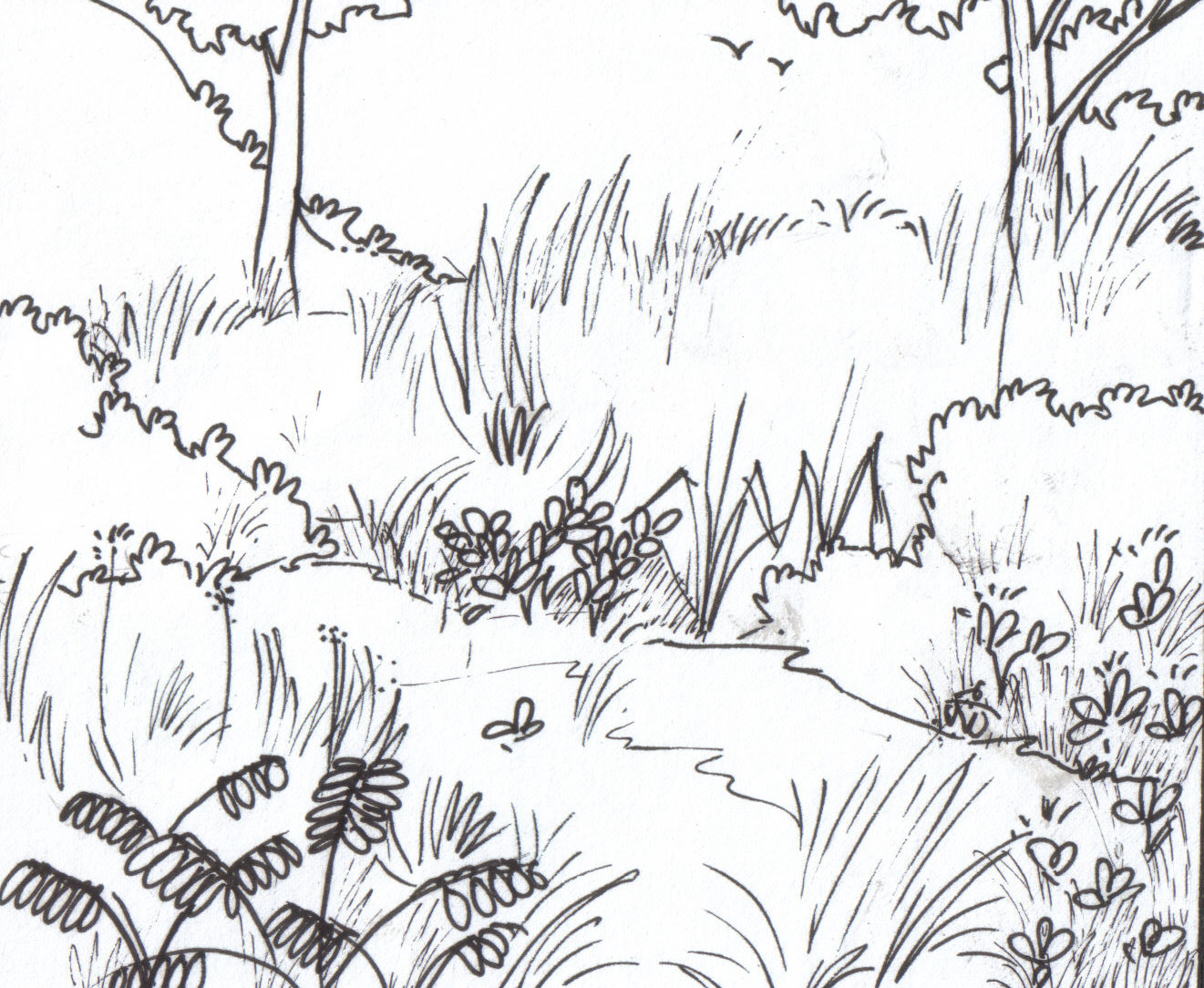
Ideas from tradition Africa
Restoration of soil fertility
a.Different crops, e.g. Maize, Beans, Soyabeans, etc. planted on same plot
b.Abandoned garden becoming bushy
(b) The science behind
-Mixed cropping adds to soil fertility, especially when leguminous plants like beans are included.
-It also promotes food security, i.e. planting different crops on the same garden means that in case one crop fails, others would still provide food.
-Shifting cultivation enables the abandoned land to regain soil fertility.
(c) Challenge for your country
Some lands in African countries have been used for farming for a long time without adding fertilizers. As a result, the soils have lost fertility leading to poor crop yields. Restoration of soil fertility is key to improving agriculture production in these countries.
(d) What you need to consider
i. Why is soil referred to as a “living thing”?
ii. If you want to grow Sugarcane, Maize, Bananas, Beans, etc. in your country, which fertilizer(s) is recommended?
iii. How does your country get the fertilizer(s) you mention in (ii) above?
4. Improving animal breeds
Ideas from tradition Africa
Improving local animal stocks
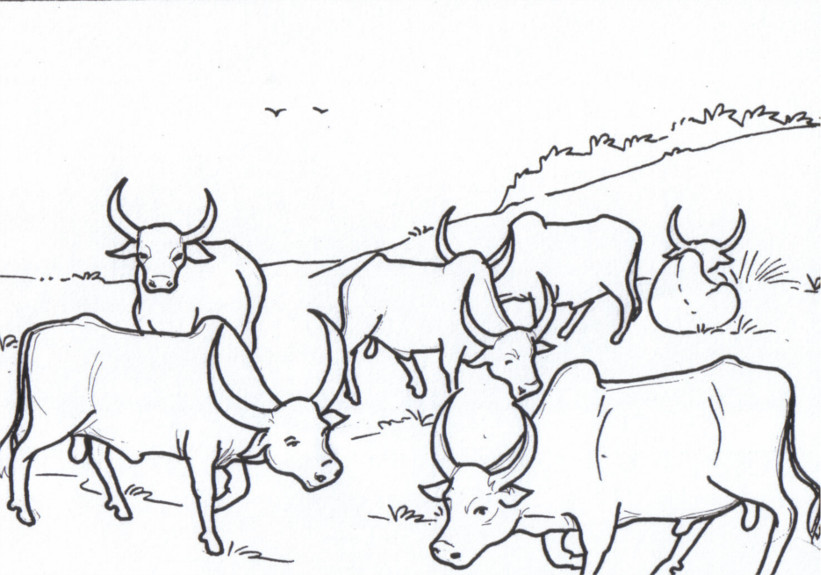
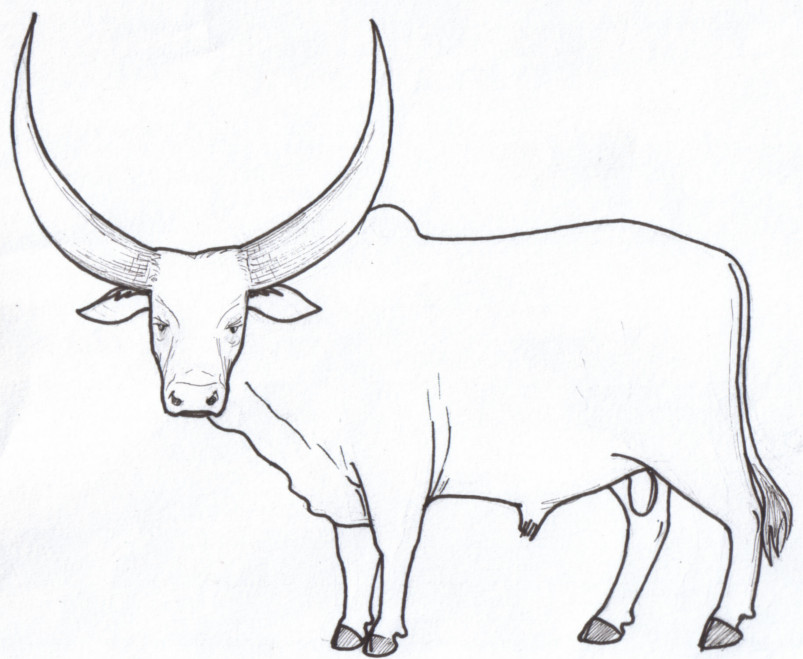
a.Different types of bulls were produced within a herd.
b.The bull with desirable looks was kept for mating with the cow. Other bulls were eaten or given away.
b) The Science Behind
Animals pass on some of their looks from grandparents or parents on to offspring. By selecting good looking bulls to mate with their cows, communities ended up, after several generations of animals, with better herds that are well adapted to local environment. These animals do not fall sick easily, can withstand dry season to some extent, produce meat/milk that has a good taste, etc.
(c) Challenge for your country
Several local breeds still exist. Outstanding challenges are (i) ensuring that your country does not lose the local breeds (ii) improving them with the aim of getting breeds able to feed present and tomorrow’s generation.
(d) What you need to think about
i. Do you know of local animal breeds in country?
ii. How do they differ from exotic animal breeds?
iii. Which disadvantages do local breeds have?
iv. How can the problems you mention in (iii) above be overcome?
v. Which careers should be promoted to get the workforce for improving animal breeds in your country?
5. Pest control
Ideas from tradition Africa
Pest control
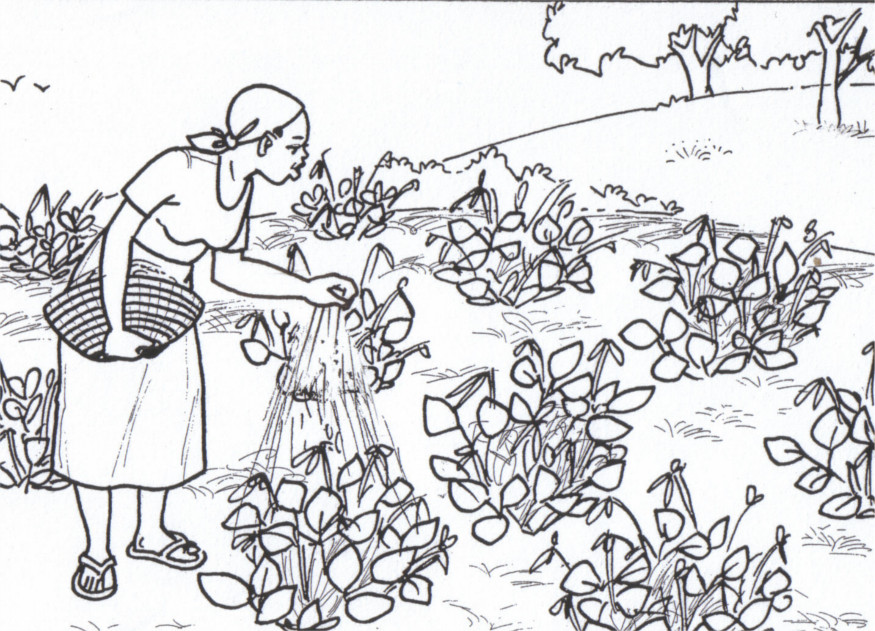
a.Vulnerable crops such as Cowpeas were protected from pests and disease-causing agents by dusting them with ash collected from a cooking place.
(b) The Science Behind
Ash is a collection of several compounds or oxides.
-Some of these oxides, upon contact with moisture, change the pH (acidity or alkalinity) of surrounding environment rendering it unsuitable for certain pests or disease causing agents.
-Other oxides are toxic or repellent to pests and disease causing agents.
(c) Challenge for your country
Your country has to reduce crop losses from pests and diseases, if it is to ably feed its expanding population while at the same time retain excess food for sale and earn money.
(d) What you need to consider
i. Why is it that many agricultural pests and disease causing agents “love” to be in Africa?
ii. What will happen if crops in your country are not protected from pests and disease causing agents?
iii. Which businesses are involved in protecting crops and animals from pests and disease causing agents in your country?
iv. Do the businesses you mention in (iii) above pose any danger(s) to your country?
v. If yes, which are these dangers?
vi. How can the dangers you mention in (v) above be minimized/overcome?
6. Promoting Agriculture in your School
You can contribute to revamping agriculture by interesting students in your school into knowing or practising meaningful local agricultural practices such as the ones described above. This is possible, especially if you have clubs in your school and you are a member to any of the following:
- Science Club
- Environment Club
- Writing Club
- Wildlife Club
- Agriculture club
The Science-Minded Generation
This interesting story builds both the faith in your Creator and the inner conviction to move your society out of misery and poverty through the power of science.
Some of the careers through which you can participate in improving agriculture in your country include:
| Career | Description |
| Agricultural technician | -Assists agriculturists in their work and helps with the collection of information. |
| Agricultural engineer | -Applies engineering principles of science and technology, as well as their knowledge of agricultural practice, to agricultural problems. |
| Agricultural extension officer | -A person between research and farmers. He informs agricultural researchers the problems farmers face. He guides farmers into using solutions or new technologies that agricultural research has produced. |
| Agricultural-economist | -Concerned with all economical activities that influence agriculture, and aims at making it more viable/profitable. |
| Animal scientist | -Works to develop better ways of making meat, poultry, eggs and milk. They also inspect and grade food products. |
| Crop scientist/Agronomist | -Helps farmers grow more and better food, but while preserving our natural resources. |
| Farmer | -Grows crops and raises animals for food production. |
| Food scientist/technologist | -Tries to create food products that are healthier, safe, tastier, and easy to use. |
| Forester | -Manages forested lands for economic, recreational, and conservation purposes. |
| Grain grader | -Responsible for the grading, storage and distribution of food grain. |
| Horticulturist | -Involved in the growing, selling and maintenance of plants for indoor and outdoor usage. |
| Soil scientist | -Studies what is in soils, and how soils help plants grow. They see how things like fertilizer can improve soils. |
| Veterinarian | -Takes care of sick and injured animals. |
| Veterinary nurse | -Works under the veterinarian, and attends to animals; gives them medicine according to prescription, assists with operations and takes laboratory samples. |